
Our Parents Bought Homes. We Can Barely Afford a 1 BHK. Is That the Whole Story?
Housing has become more expensive and the frustration is real. But the ₹400 coffee isn't the problem — and the mindset that home ownership is impossible often is.
"Our parents bought homes. We can barely afford a 1 BHK."
This sentiment has become increasingly common among young professionals. It reflects a genuine concern about rising property prices, stagnant affordability in many metropolitan cities, and the feeling that traditional financial milestones are slipping further away.
Recently, I came across a discussion where a young professional questioned the conventional life plan: study by 18, start working by 22, get married by 25, buy a home soon after. Her argument was straightforward. "Our parents could afford homes. We can't. So why shouldn't we enjoy our money today?" She pointed to ₹400 artisanal coffee, weekend getaways financed through EMIs, and expensive concerts as examples of choosing experiences over pursuing what feels like an increasingly unattainable dream.
For a moment, I found myself agreeing. Housing has undoubtedly become more expensive. In many Indian cities, residential property prices have increased far faster than salaries. The down payment alone often represents years of disciplined saving. For many young professionals, owning a home appears less like a milestone and more like a distant aspiration.
That frustration is real. But I also believe we are overlooking an equally important part of the conversation — including how inflation quietly erodes purchasing power while lifestyles expand.
Every generation has faced its own challenges.
I belong to the generation that grew up before India's economic liberalisation. Life looked very different then. Career opportunities were limited. Information was difficult to access. Waiting years for a scooter or a telephone connection was normal. Entrepreneurship required significant capital, personal connections and considerable luck. Global careers were rare, and professional growth often followed a predictable, slow-moving path.
The younger generation faces a different reality. Housing is expensive. Competition is global. Technology changes every few years. Entire professions are being reshaped by artificial intelligence. Job security is less certain than ever before.
The challenges have changed — but they have not disappeared. Every generation has had to overcome obstacles. They have simply been different obstacles.
The real issue isn't spending. It's financial direction.
Much of today's debate focuses on lifestyle spending. The ₹400 coffee. The ₹10,000 concert. The annual vacation. Personally, I don't believe these purchases are the real problem. Everyone deserves to enjoy the rewards of their hard work. Financial planning should never mean eliminating every small pleasure from life.
The concern begins when lifestyle grows faster than income. When consumption increases faster than investments. When monthly expenses expand before earning capacity does. Or when we upgrade our lifestyle long before we upgrade our skills. Those decisions have far greater consequences than the occasional indulgence — a shift I explore more fully in From Roti, Kapda, Makaan… to EMIs, Upgrades and Lifestyle.
The best investment is often yourself.
Having spent more than two decades in corporate finance, I've observed one principle that remains true regardless of economic cycles. The fastest way to improve your financial future isn't simply cutting expenses. It's increasing your value in the marketplace.
Ask yourself: Can I acquire a skill that commands a higher salary? Can I negotiate better compensation? Can I create an additional source of income? Can I build a consulting practice, freelance business or entrepreneurial venture? Am I investing consistently for the long term? Am I allowing compounding enough time to work?
Income growth has a much greater impact on wealth creation than endlessly trying to optimise minor expenses.
Mindset matters more than market conditions.
A ₹400 coffee will not make anyone financially unsuccessful. Similarly, avoiding every discretionary expense will not automatically make someone wealthy. What concerns me far more is the mindset that says: "Home ownership is impossible." Because once we convince ourselves that meaningful wealth creation is beyond reach, we often stop taking the actions that could eventually make it possible.
Financial success rarely comes from believing something is unattainable. It comes from asking better questions. Instead of asking, "Why have houses become so expensive?" — perhaps we should also ask, "How can I increase my earning capacity so that today's expensive house becomes tomorrow's affordable one?" That shift in thinking changes the conversation from frustration to action.
There is wisdom in every generation.
The older generation can teach us patience, discipline, consistency and delayed gratification. The younger generation brings adaptability, technological fluency, entrepreneurial thinking and innovative ways of creating wealth. Neither generation has all the answers. Both have lessons worth learning.
The objective should never be to prove which generation had it harder. The objective should be to build financial resilience regardless of the environment we inherit.
Final thoughts.
Economic conditions will continue to evolve. Asset prices will rise and fall. Careers will change. New technologies will disrupt industries. These factors are largely outside our control. What remains within our control are our habits, our willingness to learn, our ability to increase our earning power, and our discipline to invest consistently over time — starting with the six money decisions that shape your life.
At the end of the day, wealth is built less by the generation you're born into and more by the financial habits you develop within it. The question is not whether life is harder today than it was thirty years ago. The more important question is:
What are you doing today to ensure that your future self has more choices than you have now?
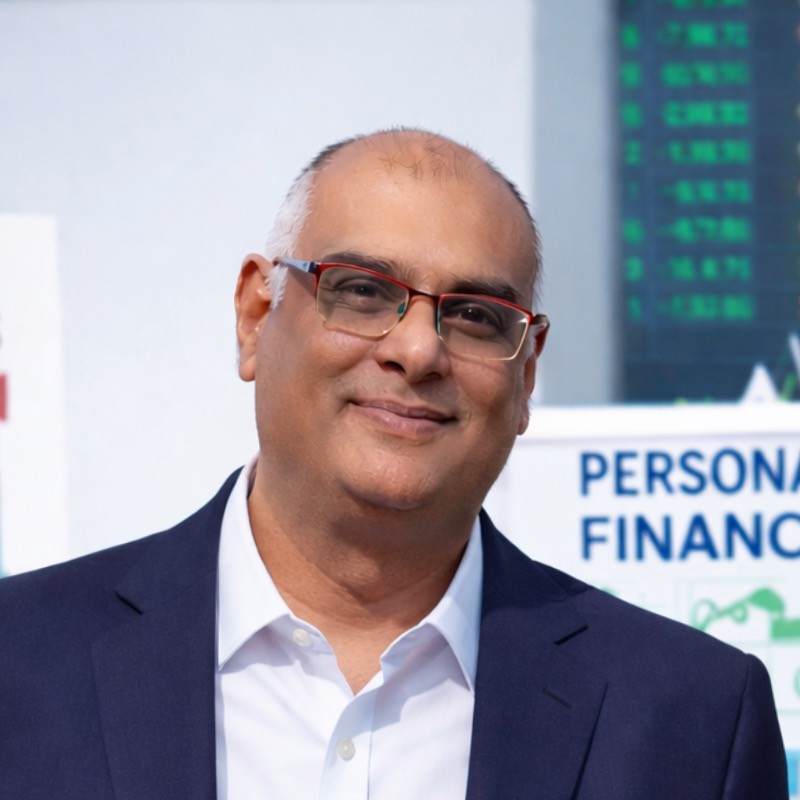
Dr. Ashu Handa
Chartered Accountant, Law Graduate and PhD in Economics. Founder of BeSampann Financial Awareness — a financial literacy initiative for young India.
From Roti, Kapda, Makaan… to EMIs, Upgrades and Lifestyle
For generations, Indians worked towards Roti, Kapda, Makaan. Today, essentials have quietly become EMIs, upgrades and lifestyle — and financial commitments are growing faster than financial strength.
Inflation: The Silent Wealth Destroyer
A 100 gm pack of Maggi cost ₹10 in 1999. In 2026, ₹15 buys you only 70 gm. That is not a 50% price increase — it is 114%. Inflation hides in plain sight.